AIA Washington 2026 Capitol Connections
As an architect involved with public projects - among other things - there is often an intersection between our work and legislation, and especially with state budgets funding that work. Ah, yes, the budget. I have been involved with AIA Washington for many years, and it seems that the state's budget is a perennial topic.
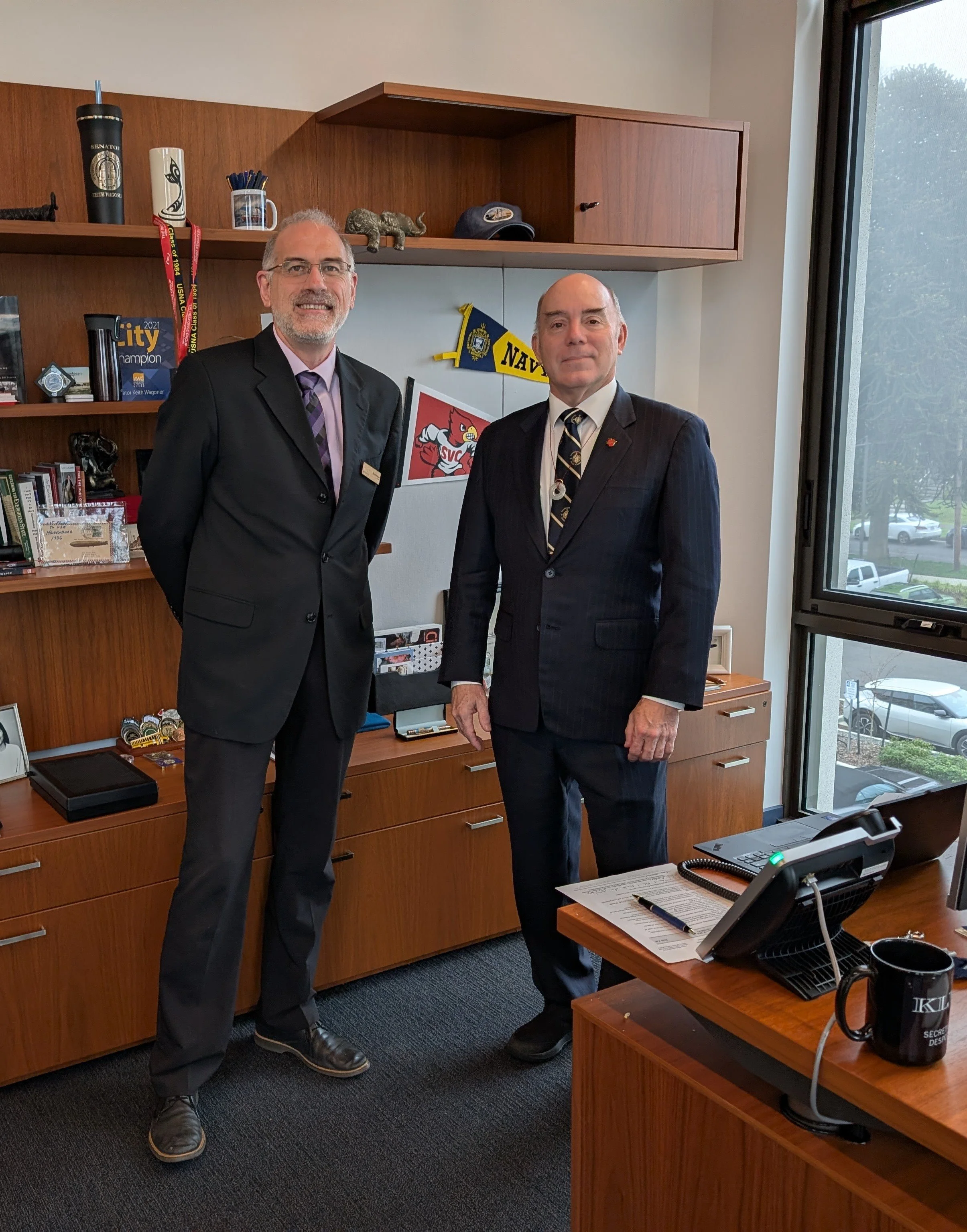
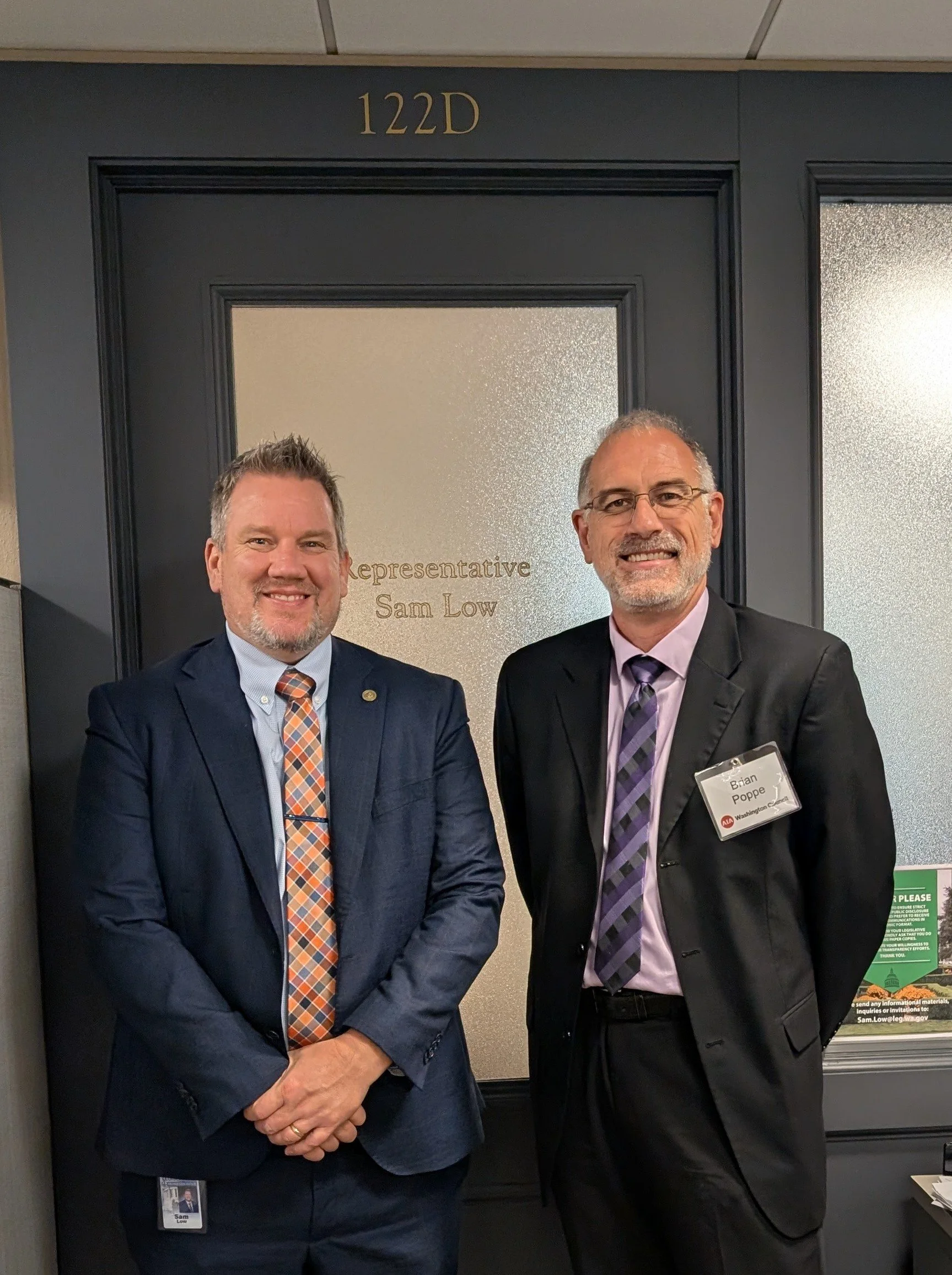
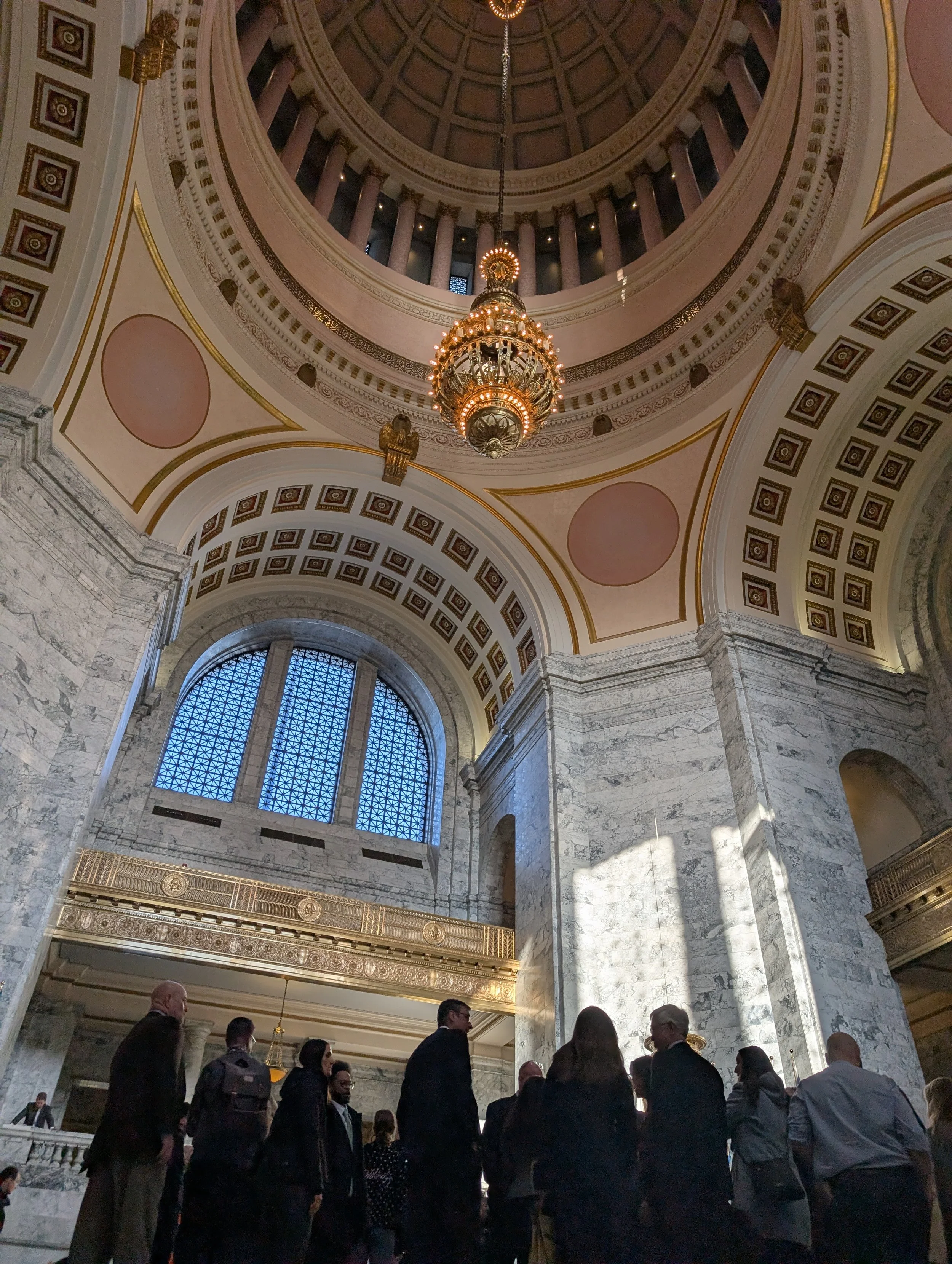
For two years now I have participated in AIA Washington's Capitol Connections. It's our "day on the hill" to help inform our state legislators about bills which may affect the built environment, climate, and the practice of Architecture while staying mindful of budgetary concerns. I had scheduled meetings with Senator Keith Wagoner, Representative Carolyn Eslick, and Representative Sam Low. Unfortunately, traffic kept me from the first meeting of the day with Representative Eslick. I focused on our three priority bills.
Seismic Retrofit of Unreinforced Masonry Buildings: HB 1810
What are Unreinforced Masonry Buildings (URMs)? I'm glad you asked. Unreinforced Masonry Buildings are pre-code brick buildings commonly constructed before World War II. They were built for fire resistance but lack reinforcing steel and adequate connections between floors, walls, and roofs, making them among the deadliest building types in earthquakes. The bill addresses the urgent need to retrofit URMs. Mindful of budget pressures, we are advocating for an initial effort by the Department of Commerce to study financial incentives for owners to retrofit their URM buildings. The bill is co-sponsored by Representative Sam Low, and as a resident of his District I thanked him for his support.
Pre-Design Requirements for State Capital Projects: HB 2353
HB 2353 would raise the mandatory pre-design threshold for state capital projects from the current $10 million floor to $15 million and add an automatic annual inflation adjustment to this threshold. Pre-design is the initial phase of a building project that occurs before any actual design work begins. It's a structured discovery and analysis process that establishes the foundation for all subsequent design decisions. It answers the critical question of: "Is this project feasible as conceived, and if so, what are the relevant parameters that define its success?" Raising the threshold can be a false economy. Pre-Design studies typically cost 2-5% of total project cost but prevent cost overruns that average 15-30% as shown on projects without proper planning. Pre-design is when you discover that the "simple" library addition requires utility relocations, that the fire department actually needs apparatus bays sized for ladder trucks not initially specified, or that ADA requirements will require grade changes affecting the entire site. It is the only phase where course corrections are inexpensive.
Embodied Carbon Emissions Reduction in Buildings: HB 2273
What is Embodied Carbon? Again, I'm glad you asked. Embodied carbon emissions refer to the amount of greenhouse gas emissions associated with the extraction, manufacturing, transport, installation, maintenance, and disposal of construction products throughout the product's life. Unlike operational carbon (from heating, cooling, and powering buildings), embodied carbon is released during the construction process itself. HB 2273 establishes embodied carbon emissions reduction targets and provides three flexible pathways for achieving reductions in new construction, additions, and renovations of 100,000 square feet or larger covered by the international building code (school district construction is exempt).
Embodied carbon measurement is fundamentally about understanding the true resource cost of building materials. Just as we've learned to measure and improve energy efficiency in buildings, measuring embodied carbon helps us understand the material and energy intensity of construction products. Beyond the smarter use of materials and resources, the Bill promotes reuse of existing buildings rather than demolition waste, encourages manufacturing innovation and process improvements, and reduces unnecessary transportation of heavy materials.
Representative Davina Duerr is not only the sponsor of HB 2273, but she is also the only architect currently sitting in the Legislature. Often the most efficient way to affect change is from the inside.
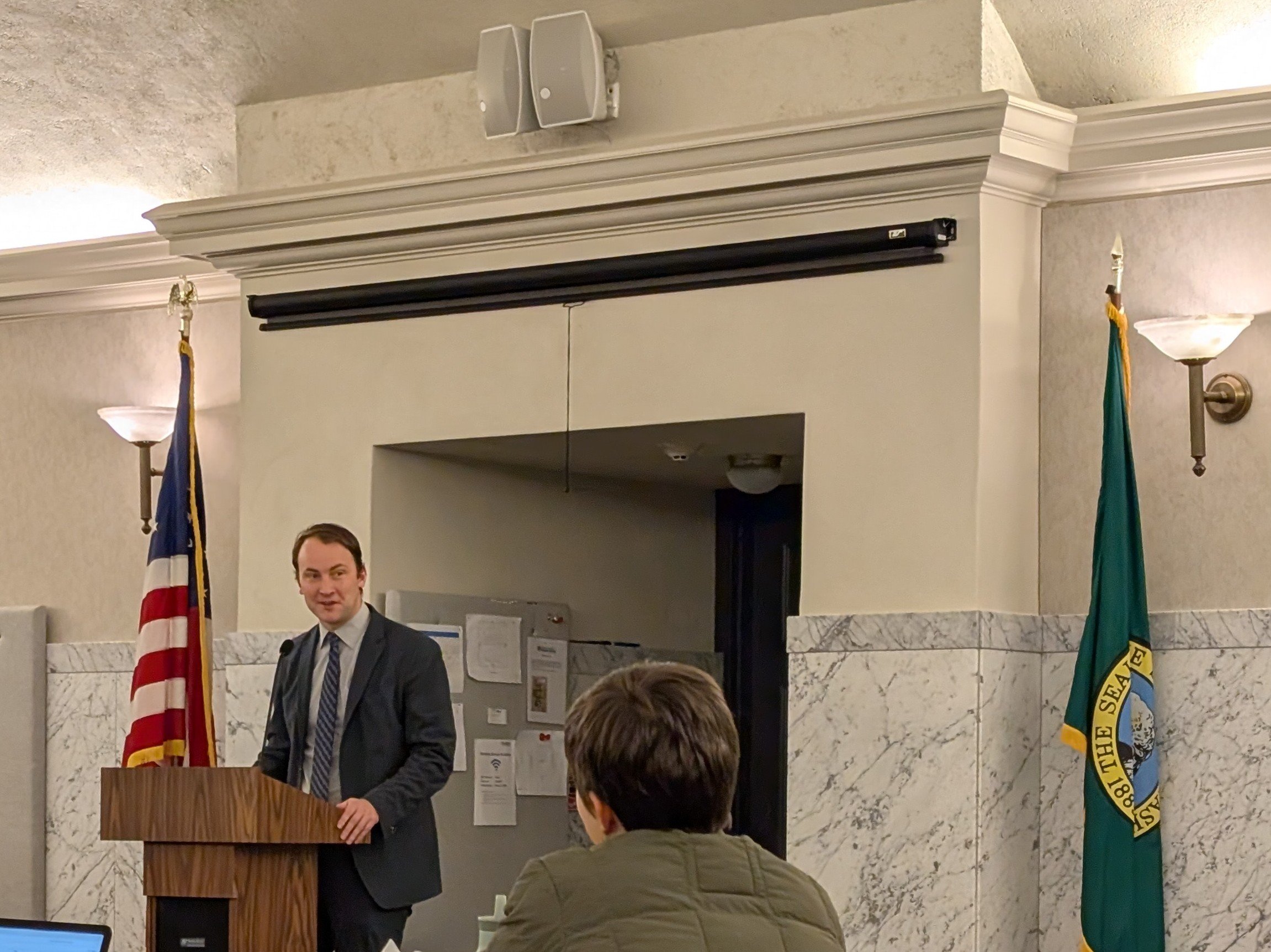
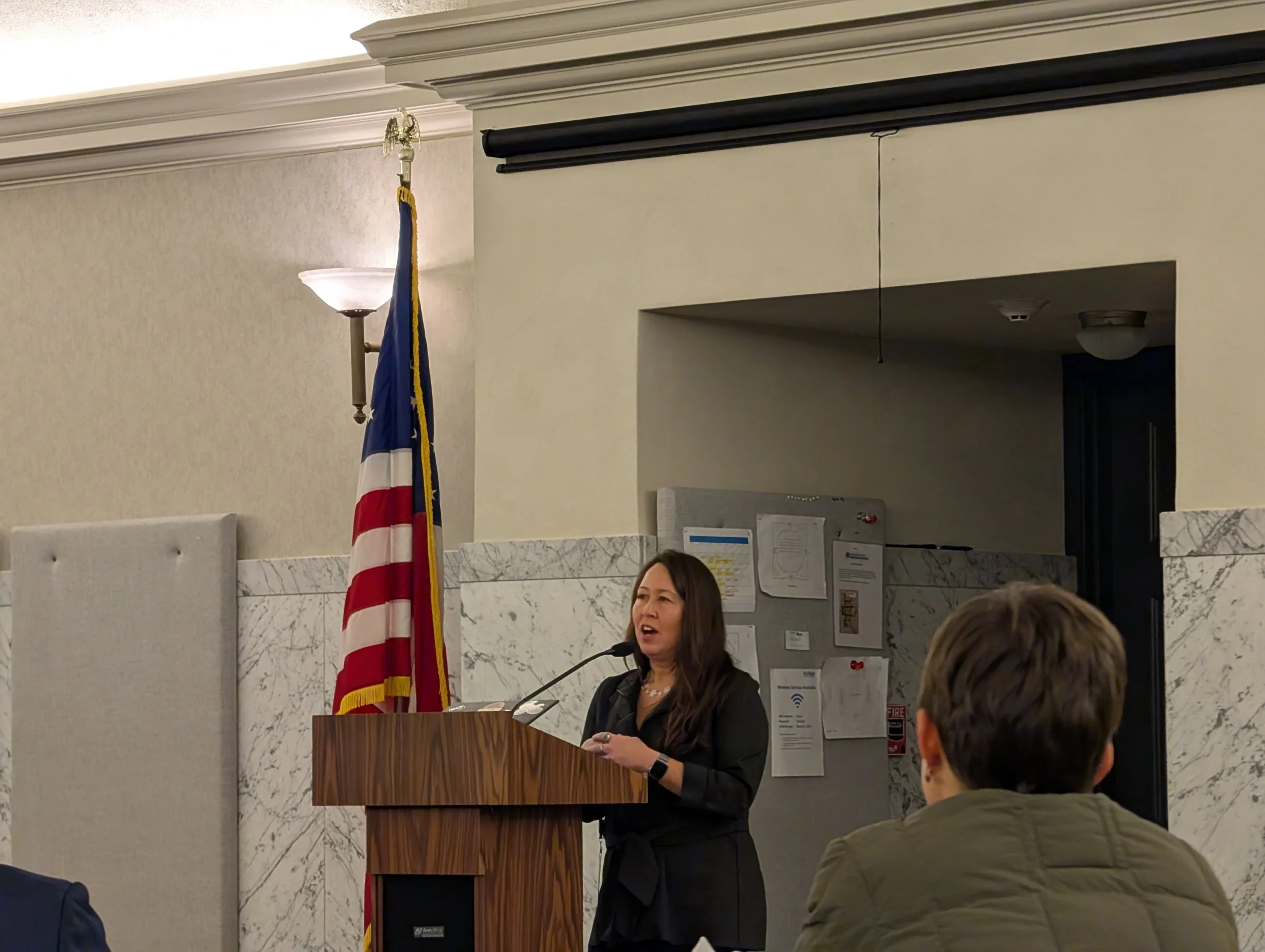
I appreciate AIA Washington and the nearly 50 other attendees for the work and energy that went into this brief opportunity to help provide that connection between our role as architects and their role as our legislators.